-
Sustainability at Fujitsu Group
-
Global Responsible Business
- Environment
-
- Environmental Management
- The Fujitsu Group Environmental Vision on Climate Change
- Living in Harmony with Nature (Conservation of Biodiversity)
- Environmental Action Plan
- Environmental Data
- Environmental Communication
- Environmental Social Activities
- Disposal and Recycling of ICT products
- Environmental Considerations in ICT Products
- Governance
-
Data and Documents
- Fujitsu Group Sustainability Data Book 2023
- Social, Governance and Environmental data
- Independent Assurance Report

- GRI Standards / United Nations Global Compact (UNGC) principles Comparison Table
- SASB Standards Comparison Table
- Sustainability Data Book Framework
- Link to regions responsible business reports
- Contact
- Sitemap
Message from the CEO
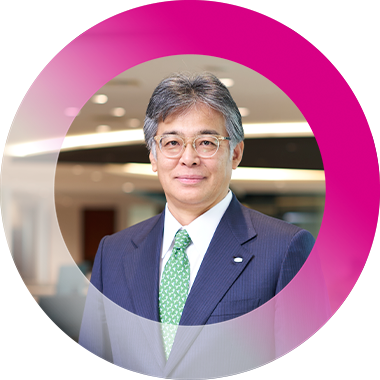 Takahito TokitaCEO, Fujitsu Limited
The world is facing a range of crises such as geopolitics, the global environment and widening social divides. Soaring resource prices and energy issues are being exacerbated by rifts in the international community, and climate change is leading to increasingly frequent extreme weather events and natural disasters on a massive scale. The signs are that these crises are becoming more complex and prolonged, and are seriously impacting the global economy and people’s day-to-day lives. Many companies now regard sustainability as central to their management, appreciating that they are at a turning point in rolling out specific initiatives aimed at helping build a sustainable society through their business operations. Digital technology has a major role to play in supporting both industry and our lifestyles. People are finding that digital transformation is becoming increasingly familiar and more important. As a technology company, we in the Fujitsu Group are conscious that we have a great responsibility to help with addressing these problems.
The Fujitsu Group states Our Purpose, which is “to make the world more sustainable by building trust in society through innovation”. To achieve Our Purpose, in May 2023 we defined our Materiality where sustainability is the core focus of business growth. The essential contributions we must make were identified as: solving global environmental issues, developing a digital society, and improving people's well-being. At the core of these three contributions, we specified 11 issues that we need to address, including tackling climate change, maintaining security of information, eliminating the digital divide, and contributing to healthcare for an improved quality of life. In the process of defining our Materiality, we sought the cooperation of a wide range of stakeholders, including customers, institutional investors, and our own employees, in a series of discussions aimed at identifying the areas where the Fujitsu Group, in particular, should be focusing its efforts. Identifying target areas for the Fujitsu Group will enable us to leverage co-creation to accelerate our sustainability transformation (SX) with our customers and partners, solve social issues and, through those initiatives, achieve sustainable growth of the Group.
This year, we also formulated our vision for 2030 of “being a technology company that realizes net positive through digital services”. The Fujitsu Group defines net positive as maximizing financial returns, addressing the three essential contributions of Materiality and positively impacting society as a whole through technology and innovation. By creating outputs and outcomes in both financial and non-financial targets and by continuing the cycle of investing in our corporate activities, we will continue to create the value both for our customers and society. As well as making the most of the Fujitsu Group’s strengths of leading-edge technology and technical prowess, we are aiming to achieve our vision through cross-industry approaches that go beyond the boundaries of industries and organizations.
The origins of value creation in the Fujitsu Group are closely tied to its efforts in areas such as respect for human rights, acceptance of diversity and equity, human resource development and maintenance of the environment, and we promote them through our GRB (Global Responsible Business) framework. In human rights, in FY2022 the Fujitsu Group revised the “Fujitsu Group Human Rights Statement” for the first time in the eight years, setting out our approach and initiatives on respecting human rights. In the statement, we affirm our support for the international norms and pledge to respect the human rights of all stakeholders in our business activities in accordance with those norms. The Fujitsu Group demonstrated its commitment to the environment this year by setting a target of net zero greenhouse gas emissions across its entire value chain (Scope 1, 2 and 3) by FY2040, and obtained Net-Zero Target certification from the Science Based Targets Initiative (SBTi). To reach this target, we aim to source 100% of the electricity used in its business operations from renewable energy by FY2030. As a corporate SX leader, the Fujitsu Group not only engages in its own sustainability management but is also leveraging the knowledge and expertise gained through that engagement to work with its customers and partners to solve societal issues.
Finally, as a signatory to the United Nations Global Compact, the Fujitsu Group supports the 10 principles in the four areas of human rights, labor, the environment, and anti-corruption. We are absolutely committed to minimizing negative impacts on people and society and to promoting a corporate culture that does not tolerate any wrongdoings.