Social Conditions Regarding Data Utilization and Fujitsu’s Initiatives
Release date: May 15, 2020
Various approaches to data utilization are currently being taken by industry, government, and academia. The Japanese government has positioned data utilization as a key measure for the realization of Society 5.0, and is promoting various proposals and national projects, such as Data Free Flow with Trust (DFFT). For its part, Academia is also conducting research ranging from basic science to applied research for the realization of a data-driven society. In the private sector, an alliance for the promotion of standardization and the formulation of technical standards for data distribution among business operators has been established. Against this backdrop, Fujitsu is working on a cross-sector data exchange platform and information banks. This article provides an overview of the current status of activities related to data utilization in industry, government, and academia, and it introduces Fujitsu’s own activities in this area.
1.Introduction
In recent years, various efforts have been made by industry, government, and academia regarding the utilization of data to increase the competitiveness of companies and enhance administrative services.
This article provides an overview of the Japanese government’s initiatives for data utilization, outlines the status of national projects and activities by related organizations, and introduces Fujitsu’s own activities in this area.
2. Trends in industry, government, and academia
2.1 Government initiatives
According to the Cabinet Office of Japanese government, Society 5.0 refers to “a human-centered society that balances economic advancement with the resolution of social problems by a system that highly integrates cyberspace and physical space.” Society 5.0 was proposed in the 5th Science and Technology Basic Plan formulated in 2016 as the vision of the future society that Japan should aim to realize [1].
Data utilization is essential for the realization of Society 5.0 and is positioned as one of the key measures in Japanʼs growth strategy. At present, activities toward the realization of Society 5.0 are being undertaken across government ministries, agencies and industry (Table 1).
Table 1 Initiatives for Realizing Society 5.0
| Ministry Name | Policy Name | Description (as relates to data utilization) |
|---|---|---|
| Cabinet Office | The 5th Science and Technology Basic Plan (2016) [2] |
|
| Cross-ministerial Strategic Innovation Promotion Program (SIP) (2nd phase) [3] |
| |
| Cabinet Secretariat | Future Investment Strategy 2018 —Change Toward “Society 5.0” and “Data Driven Society”─ [4] |
|
| Ministry of Economy, Trade and Industry | New Industrial Structure Vision [5] |
|
| Ministry of Internal Affairs and Communications | IoT Comprehensive Strategy (Revised: 2017) [6] |
|
At the Davos Conference in January 2019, Prime Minister Abe proposed Data Free Flow with Trust (DFFT) as a global initiative to promote data utilization. This is a concept for the development of digital society. It says that, once solutions have been found for privacy issues relating to personal information and for business management and security issues relating to confidential information, data, which is a source of competitiveness, needs to flow freely across borders in a way that is fair, secure, and reliable, without data oligopolization by certain countries [7].
In response to such government initiatives, Fujitsu is participating in various programs and organizations, including the Cross-ministerial Strategic Innovation Promotion Program (SIP) described later in this article, and is engaged in R&D and demonstration activities.
2.2 Academia initiatives
The data-utilizing society of the future, rather than making decisions based on past experience and intuition, will quantify problems and issues based on data and determine actions to be taken from an objective perspective, with autonomous systems that use AI—in other words, we will become a data-driven society. This cannot be achieved with AI learning technology alone, and research on various technologies, ranging from data management to blockchain, quantum key distribution, and post-quantum cryptography such as lattice cryptography, is needed.
The application of these technologies to power systems, transportation systems, building management, community development, education, work style reform, and so on, is being studied with a view to realizing a data-driven society. To take the resolution of social problems as an example, research on the prevention and mitigation of disasters, which have been occurring frequently in recent years in Japan, by using micro geo data (various types of spatiotemporal data on a micro-scale) is being conducted [8].
The concept of a data-driven society also has roots in basic science. In a field called materials informatics, data-driven research on new materials is actively proceeding. In addition, data-driven research is also progressing in fields such as drug discovery, biotechnology, physics, quantum devices, and so on. A noteworthy example is the research that is underway at the European Organization for Nuclear Research (known as CERN), the birthplace of the World Wide Web (WWW), which conducts research in the basic science field of high-energy physics. In this research, CERN uses deep learning to analyze complex events caused by the collision of accelerated particles [9].
2.3 Private sector initiatives
This subsection describes the activities of the Data Trading Alliance (DTA), a private-sector initiative that plays an important role in the realization of Society 5.0 and DFFT mentioned above [10].
DTA was established in November 2017 for the purpose of creating a technical and institutional environment in which data providers can provide data safety and smoothly, and data users can easily determine, collect, and utilize the data they want. DTA develops technical standards and operation standards for data distribution companies, promotes their adoption as international standards, and conducts certification audits of data distribution companies. In June 2019, it launched the Data Trading System Initiative, an international standardization initiative for data trading, in collaboration with the IEEE-SA (Standards Association).
As of December 10, 2019, DTA’s membership consists of 134 companies, organizations, and individuals. As a DTA member, Fujitsu participates in and contributes to many of its committees.
DTA consists of the following committees.
- Operation Standards Committee
Develops operation standards for the data distribution industry. - Technology Standards Committee
Develops technical standards for cooperation among data distribution platforms and with users and providers. - Data Utilization Committee
Conduct widespread awareness activities to promote cooperation among data distributors, along with surveys and research, policy proposals, and so on. - Certification Audit Committee
Conduct certification audits for businesses involved in the data distribution business. - Strategic Planning Committee
Deliberates on issues, business strategies, and business plans common to the various committees. - International Standardization Committee
Conducts surveys regarding trends among related organizations and performs standardization activities to promote the international standardization of data distribution.
As of December 10, 2019, the following standards have been released.
- Data Trading Market Operator Certification Standard_D2.0
Establishes requirements for data trading market operators to ensure the proper operation of the data trading market. - Data Catalog Creation Guidelines V1.1
In anticipation of data distribution across industries and organizations, these Guidelines specify the items used to describe the outline of data, as well as the structure, description, and input rules of said items.
3. Fujitsu’s Initiatives
3.1 Cross-sector data exchange platform
As mentioned above, expectations for data utilization beyond sectors such as electric power and transportation are increasing. On the other hand, information on data, such as vocabulary and catalogs, is not standardized for each company or sector, so its utilization has not actually progressed. Therefore, as one of the issues in the second phase of SIP, research on a cross-sector data exchange platform started in FY2018 [11,12].The realization of this platform is expected to enable easy use of data in various sectors, to provide accurate and convenient information, and to allow the quick creation of new services.
Since this platform requires linking of data from various sectors that function independently, it is not expected to work with a centralized system that collects data in one place. Therefore, the SIP research team is designing the platform proper as a distributed platform. In a platform designed in such way, the catalogs, data, vocabulary, and so on, of respective fields are managed within these fields, but connectors linking these items are installed in each field, and data exchange is performed through these connectors.
Fujitsu’s research activities regarding this platform focus on the following three areas.
1) Emergent data recommendation
Fujitsu carries out research on data description, organization, and recommendation methods for the discovery of target data across sectors that employ different terms and concepts. These methods utilize IMDJ (Innovations Marketplace for Data Jacket) developed by the Osawa Lab of the University of Tokyo.
2) Originality assurance
To enable the safe and secure utilization of transferred data, it is necessary to ensure its traceability. This research applies Fujitsu Laboratories’ Chain Data Lineage technology in reliably connecting data usage histories individually managed in different sectors so that anyone can trace the history of the data they use to its source [13].
3) Equivalent term identification
A vocabulary platform for common use across sectors is being studied by the Committee for Promoting the Infrastructure for Multilayer Interoperability, established by the Ministry of Economy, Trade and Industry [14].Mutual conversion of the vocabulary of each sector is possible by mapping to common vocabulary. However, for example, “elementary school” in one sector means “temporary shelter” in another field, and the correspondences are not necessarily intuitive. For this reason, vocabulary conversion rule learning technology that utilizes machine learning and other technologies to learn vocabulary conversion rules and present appropriate vocabulary candidates to users is being studied.
An example of a demonstration of such technologies currently being developed by Fujitsu Laboratories is one linking the tourism sector and disaster prevention sector. We have created an application that allows users to check tourism information and disaster prevention information and are currently carrying out a demonstration experiment at large-scale sporting events. From FY2020, we plan to further expand the scale of this demonstration, adding in new developed technologies.
3.2 Information banks
The movement to return personal data sovereignty to individuals is gaining momentum worldwide. One such initiative is the EU’s General Data Protection Regulation (GDPR). In Japan too, institutional system design and demonstration experiments are being conducted to allow third parties (other businesses) to use personal data safely and appropriately with the consent of the individuals concerned under the Information Bank (formal name: Personal Data Trust Bank) initiative.
In 2017, the Ministry of Internal Affairs and Communications and the Ministry of Economy, Trade and Industry launched a study on the certification of information banks, and in June 2018, issued the Guidelines of Certification Schemes Concerning Functions of Information Trust ver. 1.0 (hereafter, Certification Guidelines). As a result, in September 2018, the Information Bank Promotion Committee was established under the Information Technology Federation of Japan. The committee has begun to operate an information bank certification system for auditing and certifying information banks based on the Certification Guidelines, and in June 2019 the first business operator was certified.
Fujitsu, for its part, has been working on information banks as follows.
1) Japan’s first demonstration experiment with AEON Financial Group
For approximately two months from August to October 2017, Fujitsu conducted Japan’s first demonstration experiment pertaining to information banks in collaboration with AEON Financial Group [15].In this demonstration experiment, about 500 Fujitsu employees provided their personal data regarding such things as personal hobbies, preferences, and behavior patterns, and they themselves set a disclosure range for that data. Then, other businesses such as AEON Bank considered use of the disclosed data for one-to-one marketing, life consulting, and the like, revealing a need for information banks. As an operator of an information bank, Fujitsu provided personal data as consented to by the individuals concerned to fulfill the personal data use needs of companies. Further, Fujitsu issued a virtual in-house currency called FUJITSU Coin specially created for this demonstration experiment and provided it to personal data providers according to the content, amount of information, and disclosure destination of the entrusted personal data.
2) Joint study of lifestyle design movement with Dentsu
In August 2019, we conducted a field trial using an application jointly developed with Dentsu, the largest advertising agency in Japan, based on the Personium service, Fujitsu’s personal data storage (PDS) service [16].In this trial, the participants were given lifestyle suggestions based on data from their Google Calendar, the use of which they consented to, matching this data with the data supplied by the participants about their personal interests and hobbies. In this field trial, Fujitsu evaluated a service for individuals that allows them to use their own personal data effectively and safely within the context of a data-utilizing society. The convenience and security of the service was also evaluated at the functional level.
3) Marunouchi Data Consortium
In September 2019, a consortium was established jointly by Mitsubishi Estate and Fujitsu to create value by sharing and utilizing data among companies in Marunouchi area, Tokyo [17].Further, as one of its initiatives for data utilization, Fujitsu launched also the Information Bank Service Demonstration Project. In addition to dissemination and education activities regarding information bank services through seminars, this project included demonstration experiments of multiple services in collaboration with leading companies such as Dai Nippon Printing, Dentsu, and JTB (a travel agency). These demonstration experiments were in line with the concept of information bank certification mentioned earlier. Through these demonstration experiments, we obtained useful knowledge for the social implementation of information banking services. For example, we were able to identify system-related issues, and gauge society’s acceptance of personal data utilization and what value it places on it.
4) Information bank system platform
Fujitsu has been working on the development of an information bank system platform for companies that operate information banking businesses [18].Incorporating the findings from the various demonstration experiments described above, this platform will provide various functions including consent management and traceability consistent with information bank certification. By providing this platform as well as support to help businesses migrate from their existing customer management system and acquire information bank certification, we will contribute to the spread of information bank services.
4. Conclusion
This article provides an overview of industry, government, and academia trends regarding data utilization and Fujitsu’s own activities in this area.
These activities are varied, including for systems, standards, technology development, and demonstrations. For this reason, they are not conducted independently of one another but rather in an interrelated manner. Further, rather than the data being held by a single organization or company, its exchange and distribution are expected to accelerate.
Fujitsu is making important contributions to these initiatives, and it is expected to play an increasingly important role in the upcoming data-utilizing society while keeping pace with trends in industry, government, and academia.
Some of these accomplishments were made through the Cross-ministerial Strategic Innovation Promotion Program (SIP) Second Phase/Big-data and AI-enabled Cyberspace Technologies project promoted mainly by the Cabinet Office and managed by the New Energy and Industrial Technology Development Organization (NEDO).
All company and product names mentioned herein are trademarks and registered trademarks of their respective owners.
References and Notes
- Y. Ogawa et al.: “Estimation of Human Damage from the Nankai Trough Earthquake Tsunami Based on Various Scenarios Using Geo Big Data: Case Study in Kochi City.” E-journal GEO, 2018, Vol. 13, No. 1, pp. 140–155.Back to Body


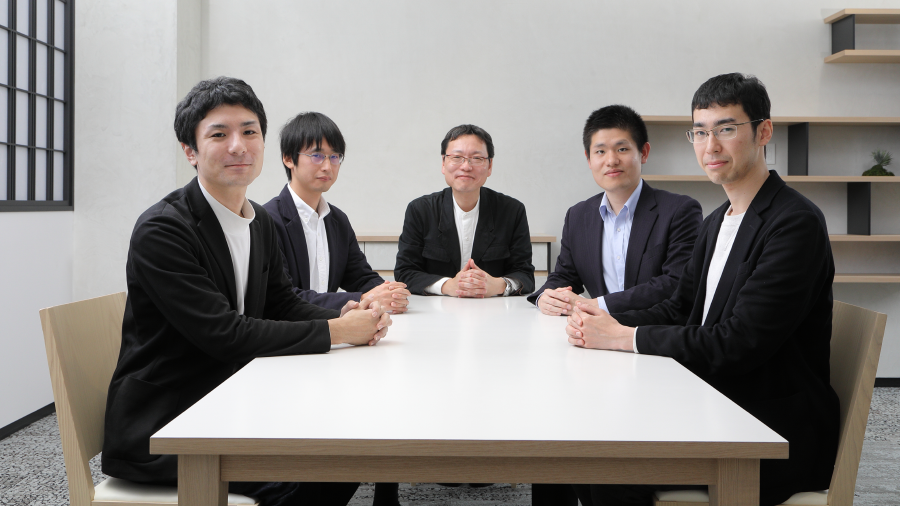
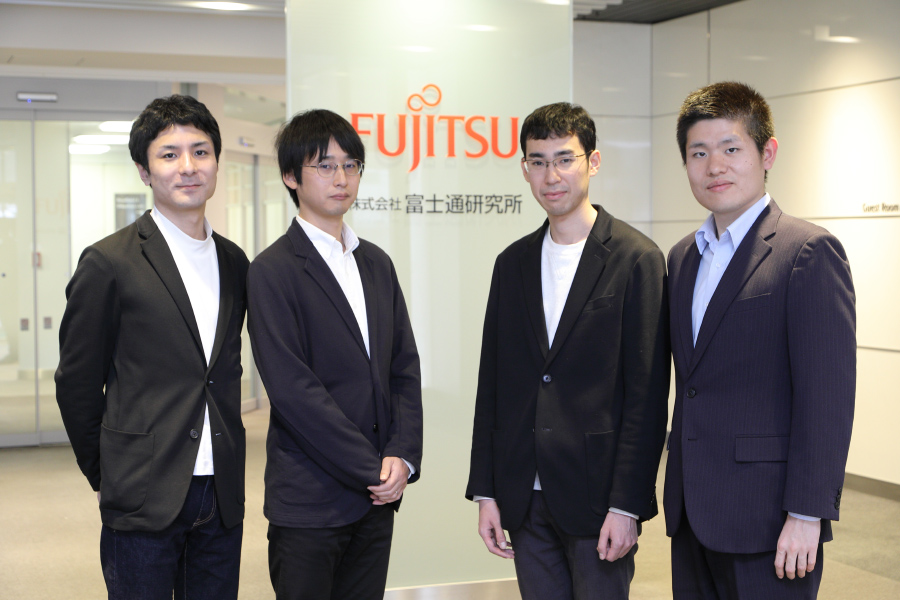
About the Authors

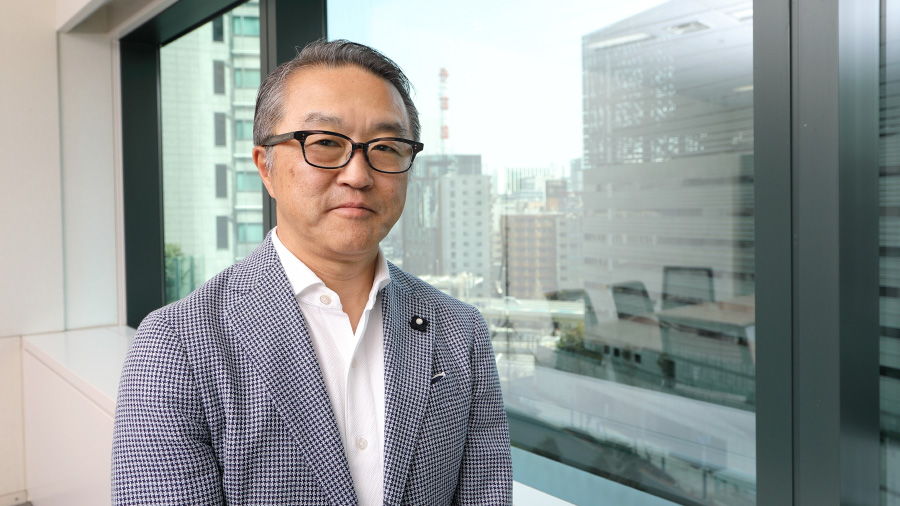
Mr. Matsutsuka is currently engaged in research on data-driven services.

Mr. Takahashi is currently engaged in public relations work on data utilization related policies.

Dr. Noma is currently engaged in research on data-driven services.

Mr. Washio is currently engaged in development of financial software.

Mr. Ikeda is currently engaged in data distribution and utilization related business.